How to Clean a Range Hood Vent
Here's how to clean a range hood vent: turn the fan off, remove the mesh grease filter, and soak it in hot degreaser water for 15 to 20 minutes before rinsing and drying. Wipe the hood body separately, then refit the dry filter before cooking again.
On this page (9 sections)
- Why does the vent need cleaning before the hood body?
- What should you gather before you start?
- How do you clean the range hood vent filter step by step?
- How do you degrease the hood body without harming the finish?
- How do you clean the vent screens and duct opening?
- Do ductless hoods need different cleaning?
- When is the grease filter due for replacement?
- How do you know the vent is working again after cleaning?
- The short version
Here's how to clean a range hood vent: turn the fan off, remove the mesh grease filter, soak it in hot water with a degreaser for 15 to 20 minutes, then rinse, dry, and refit it. Wipe the hood body and the vent area with a degreaser and a soft cloth, then check airflow before the next meal.
That order matters. The mesh traps most of the grease, so cleaning it first keeps the hood body job short and stops loosened grease from dripping back down onto the cooktop.
Why does the vent need cleaning before the hood body?
The mesh grease filter is the part that clogs first, so it sets the pace for the whole job. It sits between your cooking and the fan, and every pan of bacon sends fine grease into it.
On an under-cabinet hood, that mesh sits right above the burners. Grease builds a tacky layer on the aluminum, and air has to push through those small openings to reach the fan wheel.
Once the mesh is out of the way, you can see the canopy underside and the seam where the hood meets the cabinet. That area holds a film of vaporized grease that settles and then cools.
Working top to bottom also protects the stove. Grease you loosen on the hood shouldn't fall onto a clean cooktop, so cover the burners with a towel until you're done.
What should you gather before you start?
Have a degreaser, hot water, a soft sponge, a basin, and a dry cloth ready before you touch the filter. A sink that fits the full mesh width saves you a trip, so measure your filter first.
An under-cabinet model often uses a mesh panel around 11.8 by 14.3 inches, and some are slightly larger. Fill the basin to cover it fully, since a half-submerged filter only cleans on one side.
Wear gloves if your skin reacts to strong cleaners, and open a window. Vent hood cleaning works best with a little airflow so fumes don't sit in a small kitchen.
Keep the fan off for the whole job. Running it while you wipe just pulls loose grease upward into the motor housing and the duct.
How do you clean the range hood vent filter step by step?
Soak the mesh, not the machine, is the short answer. Here is the order that keeps grease off your cooktop and out of the motor.
- Switch the fan off and unplug it if the cord reaches an outlet.
- Slide the mesh filter out using its front tabs.
- Fill a basin with hot water and a few sprays of degreaser.
- Soak the mesh for 15 to 20 minutes, flipping it once.
- Rinse under hot running water and shake out the excess.
- Stand it on edge to dry fully before it goes back.
Grease loosens faster in hot water than cold. If the mesh still feels slick after soaking, repeat the soak rather than scrubbing hard with a rough pad, which can bend the frame.
For deeper filter detail, our walkthrough on how to clean range hood grease filter covers mesh density and heavy buildup.
How do you degrease the hood body without harming the finish?
Spray degreaser on a cloth or sponge, not straight into the hood, so liquid can't reach the switch panel or motor. Wipe the canopy underside, the front edge, and the cabinet seam in the same direction.
Rinse the cloth often. A cloth loaded with grease just spreads it back over the steel, so swap it for a clean one halfway through.
Keep degreaser off the aluminum vent slots where you can. Easy-Off says its formula should not be used on aluminum surfaces, so treat the steel canopy and the stove spill zone, not the mesh frame.
Finish with a stainless cleaner on any steel that will show. Our guide to how to clean a stainless steel range hood covers grain direction and streak-free buffing.
Which spray suits a steel canopy?
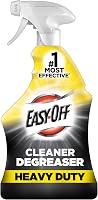
Pick the Easy-Off spray when the hood body has a heavy film and you want to work fast. It's a heavy-duty degreaser sold for countertops, hoods, grill grates, and workbenches.
Spray and wipe is the whole method, so you don't need a long scrub. Keep it off aluminum, rinse the surface, and don't let the spray dry on the steel.
When do you want the stainless kit instead?
The Weiman kit suits the final step on a brushed or black stainless canopy. It includes a 12 oz spray, wipes, and a microfiber cloth, all ammonia free and pH neutral.
Its spray won a 2026 Good Housekeeping Cleaning Award, and the maker says the polish resists fingerprints and adds a light protective barrier. Work along the metal grain, then buff with the cloth.
How do you clean the vent screens and duct opening?
Wipe the screens and the visible duct mouth with a barely damp cloth, since you can't safely reach far inside a duct. Push the cloth up to the flap if your hood vents outside, and check that it moves freely.
The exhaust flap is a common airflow problem that looks like a dirty filter. A flap stuck half open cuts suction the same way a clogged mesh does, and it's easy to spot from below.
Don't pour water or spray cleaner up into the duct. Loose grease inside a duct is a fire risk, and adding liquid doesn't remove it.
If the screen above the fan is thick with grease that won't wipe, our guide to how to clean range hood screens covers soaking and refitting.
Do ductless hoods need different cleaning?
Ductless hoods need one extra check on the charcoal layer, because they recirculate air through it instead of pushing it outside. The mesh filter still comes out and soaks the same way.
Charcoal filters can't be washed and reused. Once the layer is saturated, it stops trapping odors and lets grease-laden air back into the room, so keep the mesh clean to protect it.
Our article on do range hood charcoal filters work explains what they catch and when a replacement makes sense.
Grease on the mesh reaches the charcoal faster when the mesh filter is let go. Clean the metal part on schedule and the charcoal layer lasts the interval its maker gives.
When is the grease filter due for replacement?
Replace a mesh filter when the frame bends, the mesh tears, or grease won't rinse out after two soaks. Cleaning works for years on a solid filter, but a damaged frame lets air slip past the mesh.
The Bagean BPS1FA30 is a two-pack of aluminum mesh filters that measure 14.3 by 11.8 inches with a 0.35 inch thickness. The maker says they're built thicker than the industry standard and reinforced to resist bending.
Measure your old filter before ordering, since hood sizes vary. A filter that sits loose leaks grease straight into the fan, and one that's too wide won't seat on the tabs.
If your filter still cleans up well, keep it and spend the money elsewhere.
How do you know the vent is working again after cleaning?
Refit the dry filter, switch the fan on, and hold a tissue near the vent slot. It should pull toward the hood within a few seconds, and the airflow should feel even across the width.
A wet filter is the usual reason for weak suction right after a clean. Mesh holds water in its folds, and a damp panel cuts flow until it dries, so stand it on edge until it's fully dry.
Listen for a new rattle or hum. Loose mesh that isn't seated on its tabs vibrates against the frame, and refitting it flush usually ends the noise.
Finally, wipe the cooktop and the wall behind the hood. The job isn't done if grease you knocked loose is still sitting below the vent.
The short version
Cleaning a range hood vent is a two-part job: soak the mesh filter, then wipe the body, and never spray cleaner up into the motor or duct. The mesh does most of the work, so put your effort there.
Choose the Easy-Off spray for a fast degrease on a steel canopy, and follow with the Weiman kit for a streak-free finish on stainless. Grab the Bagean replacement when the old mesh frame is bent or torn.
Then set a reminder every month or two, because a clean mesh is what keeps a range hood vent pulling air the way it should.
Frequently asked questions
How often should I clean a range hood vent?
Clean the mesh filter every 1 to 2 months if you cook most days, and the hood body monthly. Heavy frying shortens that gap.
A filter that feels tacky or drops airflow is overdue, and a visible grease film on the canopy means the whole vent needs attention.
Can I put a range hood filter in the dishwasher?
Only if the maker allows it. Dishwasher heat can dull or warp thin aluminum frames, so a hand soak in hot water and degreaser is safer.
Weiman's cleaner is ammonia free, which matters because many aluminum filters react badly to ammonia over time.
Do ventless range hoods have the same cleaning steps?
Mostly, yes. You still degrease the mesh filter and wipe the body, but ductless hoods also hold a charcoal layer that needs checking on its own schedule.
Grease on the mesh reaches the charcoal faster when the mesh filter is let go, so keep both in order.
Why does my range hood lose suction after cleaning?
The common cause is a wet filter refitted too soon, or a filter seated at an angle that partly blocks airflow. Dry the mesh fully and check that the tabs sit flush.
Also look at the duct flap if your hood vents outside, since a stuck flap cuts flow the same way.
What should I avoid when cleaning the hood body?
Skip abrasive pads and ammonia sprays on stainless, and never spray degreaser straight into the motor housing or switch panel. Easy-Off says its formula should not be used on aluminum surfaces, so keep it on the steel canopy and the stove area, not the mesh.