Vented vs Non-Vented Range Hood: Which to Buy? (November 2026)
Buy a vented hood if your kitchen has a duct route to the outside; buy a non-vented hood if it doesn't. In this vented range hoods vs non vented comparison, the duct path decides more than the hood itself, so measure that first.
On this page (9 sections)
- Vented vs non vented range hoods: the two side by side
- The duct route decides it
- Filtration: what each type traps
- How much air each type moves
- Noise: what each setup sounds like
- Installation: what changes in the kitchen
- Who should buy which?
- What each option costs over time
- Verdict: vented or non-vented for your kitchen?
Buy a vented hood if your kitchen has a duct route to the outside; buy a non-vented hood if it doesn't. The vented range hoods vs non vented choice starts with one question: where can the air go?
If you can run a duct through a wall or roof, venting removes smoke and moisture instead of recirculating them.
If no duct route exists, a non-vented hood filters the air and sends it back into the room. That's a real difference in how your kitchen handles grease, steam and cooking smells.
This comparison covers what changes between the two setups and which of three 30 inch hoods fits each case. We compared the specs and features to show where the venting choice actually costs you.
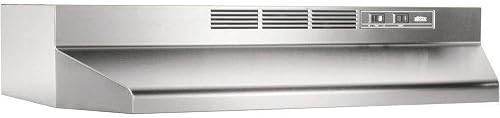 Best for kitchens without an outside duct
Broan-NuTone 413004 Ductless 30 Inch

Vented vs non vented range hoods: the two side by side
A vented hood exhausts air outside; a non-vented hood filters and recirculates it. That single difference drives the duct work, the filter upkeep and how much moisture leaves your kitchen.
| Feature | Vented hood | Non-vented hood |
|---|---|---|
| Where air goes | Outside through a duct | Back into the kitchen |
| Duct needed | Yes, to a wall or roof | No |
| Main filter | Mesh or baffle for grease | Charcoal or carbon for odors |
| Moisture removal | Yes | No |
| Install limits | Needs a clear duct path | Fits almost any under-cabinet spot |
| Filter care | Washable in many models | Charcoal needs replacing |
The table shows the trade-off clearly: venting does more, but only if the duct route exists. A non-vented hood wins on installation freedom and loses on what it can remove.
Airflow matters too. The vented SNDOAS model moves up to 230 CFM, while the non-vented Broan insert moves 100 CFM.
Higher airflow helps clear a hot pan faster, but only when that air actually leaves the room.
The duct route decides it
If you can reach outside air, vent. If you can't, go non-vented.
Check the wall behind the stove and the space above the cabinets before you compare hood models.
A vented hood needs a duct from the hood to the outside. That means an exterior wall, a roof path or a chase through the house.
In a rental or an interior kitchen, that path often doesn't exist.
A non-vented hood has no such requirement. The Broan-NuTone 413004 installs as a non-ducted insert under the cabinet and filters the air with a charcoal filter.
It measures 17.5 inches deep, 30 inches wide and 6 inches high, so measure your cabinet space before ordering. The insert also needs at least 18 inches of clearance above the cooktop, so a low cabinet line can rule it out.
The SNDOAS USGF3976S gives you a middle route. It vents through the top or rear when a duct exists, and it also installs ductless with its included carbon filter.
If you plan to remodel later, that flexibility saves buying twice.
What if there's a duct but it's far away?
Long, winding duct runs reduce how well a vented hood performs. Straight, short runs to the outside work best.
If the nearest exterior wall is far from the stove, weigh the cost of the run against the benefit of venting.
A ductless hood sidesteps the whole question. It won't match a short, straight vent for clearing steam, but it keeps the installation simple.
Filtration: what each type traps
Vented hoods catch grease and send smoke and moisture outside; non-vented hoods catch grease and odors and recirculate the rest. The filters tell you what each type is built to do.
A vented hood usually uses a mesh or baffle filter to trap grease before air leaves. The SNDOAS model lists a baffle filter type, and the COMFEE' CVU30W2ABB uses a mesh filter.
Both catch grease, and the vented setup also pushes smoke out.
The SNDOAS kit pairs its aluminum mesh filter with a carbon cotton composite layer, so the same hood carries both the grease-catching part and the odor-catching part. In ducted mode the carbon layer does less work because the exhaust leaves the room.
In ductless mode it becomes the main defense against cooking smells.
A non-vented hood adds a charcoal layer for odors. The Broan insert's charcoal filter is replaceable, so filtration keeps working as long as you swap it.
Charcoal is what traps cooking smells before air returns to the room.
Do charcoal filters remove smoke?
Charcoal filters handle odors and some grease, but they don't clear smoke the way a vent does. Fine smoke particles can pass back into the kitchen.
That's the honest limit of recirculating filtration.
If you sear or fry often, venting is the stronger choice. If your cooking is lighter, a ductless hood with a fresh charcoal filter keeps the kitchen tolerable.
Our guide on how a recirculating range hood works explains the filter cycle in more detail.
How much air each type moves
Vented hoods usually move more air because they push it outside; non-vented hoods recirculate within the room. Compare CFM figures when you shop, since airflow is the main performance number.
The SNDOAS convertible hood reaches 230 CFM on its top speed. The COMFEE' model reaches 200 CFM, and the Broan non-vented insert runs 100 CFM.
Those figures describe fan output, not how well the hood clears your kitchen.
Higher airflow helps when a vented hood sends that air outdoors. A ductless hood recirculates its air, so its CFM tells you how fast the filter cycle runs, not how much leaves the room.
Our post on whether ductless range hoods are effective digs into that difference.
Does a higher CFM always mean better?
Not on its own. A vented hood with a long, restricted duct may clear less than its CFM suggests.
A ductless hood's charcoal filter also loses effectiveness over time, which reduces real performance regardless of fan speed.
Match airflow to your cooking. High-heat searing and wok cooking need more than light boiling and reheating.
Choose a hood whose airflow suits your habits rather than the biggest number.
Noise: what each setup sounds like
Vented hoods can sound louder at high speed; ductless hoods can run quieter but work against filter resistance. The noise figure is worth checking if your kitchen opens onto living space.
The SNDOAS model is rated 56 dB, which is moderate. The COMFEE' model is rated 71 dB, noticeably louder at its top speed.
The COMFEE' also weighs less than the others at 7.6 pounds, which hints at lighter metal and plastic construction in the body. The Broan insert lists a two-speed fan without a noise figure.
A vented hood at high speed pushes air through duct work, which can add noise. A ductless hood moves air through filters, which can muffle some sound but also slow the airflow.
Our airflow and noise section covers how to compare these numbers.
Is a loud hood a dealbreaker?
It depends on where you cook and who's nearby. A 71 dB hood is loud enough to raise your voice over.
If you cook while others watch TV or sleep, look at quieter models or run a louder one at its lower speed.
Ductless hoods aren't automatically silent. The fan still moves air, and a blocked filter raises the effort.
Replace filters on schedule to keep noise down as filtration loads up.
Installation: what changes in the kitchen
A vented hood needs a duct path and possibly wall or roof work; a non-vented hood needs only power and cabinet space. Plan the install before you buy, because retrofitting a duct is the expensive part.
For a vented setup, the duct runs from the hood to the outside. That may mean cutting a wall, running pipe through a cabinet or working on the roof.
Each step adds time and cost. The SNDOAS hood needs an exhaust pipe for vented mode and ships without one, so price that part before you commit.
A non-vented hood skips the duct entirely. The Broan insert mounts under a cabinet and needs power for the fan and light.
The SNDOAS model is 4.7 inches high and works as either vented or ductless, so it covers both installs.
What if the kitchen already has a duct?
Reuse it if it's sound and reaches outside. Check the duct size and route before choosing a hood.
A vented hood matched to an existing duct is often the simpler, better upgrade than switching to ductless.
If the duct is blocked or too long, a non-vented hood avoids the problem. It won't clear moisture, though, so weigh the cost of a new duct against the benefit.
Who should buy which?
Choose vented for heavy cooking and a real duct path; choose non-vented for rentals, interior kitchens and simpler installs. Your cooking volume and your duct situation point to one answer.
Buy vented if you sear, fry or cook with high heat and can reach the outside. The SNDOAS USGF3976S gives you that option, plus a ductless fallback if plans change.
Its 230 CFM fan and LED light suit a busy kitchen.
Buy non-vented if no duct route exists or you rent. The Broan-NuTone 413004 is the safe pick: it installs as a ductless insert with a replaceable charcoal filter and separate rocker switches for fan and light.
Its 100 CFM fan is modest, so it suits lighter cooking.
The COMFEE' CVU30W2ABB is the budget middle option. It runs ducted or ductless at 200 CFM, with mesh and carbon filters included.
It's louder at 71 dB, so it fits small kitchens where noise matters less.
Who should skip the non-vented option?
Skip ductless if you cook with heavy smoke and hate lingering smells. Recirculating air leaves moisture and some smoke indoors.
In that case, spend on a duct route or cook with better ventilation nearby.
If a 30 inch hood feels narrow, our best 36 inch ductless range hoods guide covers wider options. Measure your cabinet opening first, then match the width.
What each option costs over time
Vented hoods cost more upfront because of duct work; non-vented hoods cost more in filter replacements. The balance shifts with how long you stay and how much you cook.
A vented install may need a contractor, new duct, wall or roof work. That's a one-time cost that raises the total.
A non-vented hood avoids it but adds charcoal filter swaps.
Budget for filter changes on any ductless hood. The Broan's charcoal filter is replaceable, and the SNDOAS and COMFEE' models use carbon filters too.
A vented hood's mesh or baffle filter usually washes clean instead.
Is a convertible hood worth it?
Yes if you might add a duct later. The SNDOAS model lets you start ductless and vent outside when the duct is ready.
That flexibility often beats buying a second hood.
Skip the convertible premium if you know a duct will never happen. A dedicated non-vented hood like the Broan insert is simpler and usually cheaper.
Verdict: vented or non-vented for your kitchen?
Vent outside when you can; recirculate when you can't. That's the whole vented vs non vented decision in one line.
The duct route, your cooking style and your budget settle the rest.
The SNDOAS USGF3976S is the better buy for most readers who can vent or might vent later. Its 230 CFM fan, top or rear venting and ductless fallback make it the flexible pick.
Remember it is hard-wired without a plug and needs an exhaust pipe for vented mode.
The Broan-NuTone 413004 is the best buy when no duct route exists. Its replaceable charcoal filter and simple under-cabinet install keep a ductless kitchen running without construction.
Note that the bulb is not included and a light guard is needed if you fit an incandescent bulb.
The COMFEE' model fits budget kitchens that still want the choice, as long as you can live with its louder 71 dB rating. It ships with both an aluminum filter and a carbon composite filter.
For more on recirculating options, read our recirculating range hood vs vented comparison.
Frequently asked questions
Is a vented or non-vented range hood better?
A vented hood is better when you can run a duct outside, because it pushes smoke and moisture out of the kitchen. A non-vented hood is better when no duct route exists, since it filters and recirculates air instead.
Do non-vented range hoods actually remove smoke?
Non-vented hoods filter grease and some odors, but they don't push air outside. Charcoal filters trap cooking smells and mesh catches grease, so the air gets cleaner but moisture and fine smoke stay indoors.
Can I install a vented hood if my kitchen has no duct?
You can only vent outside if there is a route through a wall or roof to open air. Without one, choose a ductless or convertible hood instead of trying to vent into a cabinet or attic.
How often do non-vented range hood filters need changing?
Charcoal filters typically need replacing every few months depending on cooking frequency. Mesh and baffle filters can be washed, but carbon filters lose effectiveness and should be swapped, so check the hood's instructions for the right interval.
Is a convertible hood the same as a vented hood?
No. A convertible hood can be installed either way: vented with a duct or ductless with a carbon filter.
A true vented hood only exhausts outside, and a true non-vented hood only recirculates.