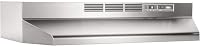
How Long Does a Range Hood Last?
A range hood usually lasts 10 to 15 years, and ducted under-cabinet models tend to reach the top of that range. Grease buildup, motor quality and how often you clean the filters decide whether yours lands near 10 or near 15.
On this page (9 sections)
- How long does a range hood last compared with its parts?
- What makes some hoods last longer than others?
- Which parts fail first, and when?
- How does filter care extend a range hood's life?
- Do ductless and ducted hoods age differently?
- What shortens a range hood's life the most?
- How long do these under-cabinet hoods last?
- When should you replace rather than repair?
- What's the takeaway on how long a range hood lasts?
A range hood usually lasts 10 to 15 years, and ducted under-cabinet models tend to reach the top of that range. Grease buildup, motor quality and how often you clean the filters decide whether yours lands near 10 or near 15.
The number matters when you're deciding whether to fix a noisy hood or replace it. The rest of this guide covers what wear parts fail first, what you can do to add years, and how to spot the point where a new hood is the smarter spend.
How long does a range hood last compared with its parts?
The cabinet and shell last decades; the motor and fan are what actually wear out. Most hoods are retired because the motor, controls or lights fail, not because the stainless steel rusts.
Motors carry the load. Every hour of cooking spins the fan and pulls greasy, warm air through the housing, and that grease slowly coats the blades and the motor bearings.
Lights are usually the first thing to go. LED panels and bulb sockets fail long before a good motor does, and many are easy to replace.
Switches and touch panels come next. A worn touch pad or a sticky push button can make a perfectly good motor feel broken.
The shell is the survivor. Stainless steel, painted steel and glass hoods usually outlast every part under the hood, so a 12-year-old unit with a dead motor still has a good cabinet.
What makes some hoods last longer than others?
Motor quality and ducting do most of the work. A stronger, better-sealed motor built for heavy cooking will outlast a small one pushed hard every day, and a short, smooth duct run adds years by reducing strain.
Motor size and build
A dual-motor setup like the one in the Hauslane UC-PS18 runs cooler during long searing sessions than a small single motor that has to max out. Lower stress now means less wear later.
Hauslane backs the UC-PS18's motors with a lifetime warranty, which is a fair signal of how the brand rates its own parts.
Ducting and airflow
A hood venting through a wide, direct duct moves air with less resistance, so the fan spins easier. Long runs, tight elbows and undersized ducts make every cooking session a workout for the motor.
This is a big reason ducting choices matter beyond performance on day one. A hood that vents outside also keeps grease out of the housing instead of recirculating it.
Filters and upkeep
Baffle filters catch grease before it reaches the motor, but only if they're clean. Mesh filters clog faster and warp over time, while stainless baffles hold their shape for years.
Build materials and finish
Stainless housings resist heat and moisture better than painted steel, and thicker panels vibrate less, which spares fasteners and seams. A cheap housing tends to rattle itself loose over a decade.
Which parts fail first, and when?
Expect lights and controls around year 5 to 8, the motor closer to year 10 to 15, and the fan blades somewhere in between. The order shifts with use, but the pattern is consistent.
- LED lights and bulbs: often the first failure; cheap and easy to swap on most hoods.
- Touch panels and switches: a few years after the lights, especially on hoods with moisture exposure.
- Fan blades and blower wheel: grease imbalance shows up as vibration or noise.
- Motor and capacitor: the big one; a humming hood that won't spin usually points here.
- Damper and duct flap: a stuck flap cuts airflow and makes the hood sound louder than it is.
If your hood lights up and hums but moves little air, check the damper and filters before assuming the motor is gone. That simple check saves plenty of unnecessary replacements.
How does filter care extend a range hood's life?
Clean the filters every month or two of regular cooking, and the motor faces far less grease. Baffle filters are the easiest to keep up with because most are dishwasher safe.
Pop them out, run them through a normal cycle, and let them dry before reinstalling. The Hauslane UC-PS18 and the COSMO UMC30 both use dishwasher-safe stainless baffle filters, so upkeep stays simple.
Wipe the underside of the hood and the fan housing every few months. Grease that hardens on the blower wheel throws it out of balance, and an unbalanced fan wears the bearings fast.
Check the duct damper once a year. A flap stuck half open cuts airflow and makes the motor strain.
Do ductless and ducted hoods age differently?
Ducted hoods generally last longer because grease and smoke leave the kitchen. Ductless models push air back into the room through a charcoal filter, so more grease settles inside the housing over the years.
If you're unsure which type you have, our guide to what a convertible under cabinet range hood is explains how one unit can run either way.
Convertible hoods give you options. Run one ducted if you can, because the motor and housing stay cleaner and the lifespan stretches toward the upper end of the 10 to 15 year window.
What shortens a range hood's life the most?
Neglected filters, blocked ducts and constant high-speed use are the main culprits. Each one adds heat and strain to a motor that was built for normal cooking loads.
Cooking without the fan on is another quiet killer. Smoke and steam settle into the housing and turn to sticky residue that eventually reaches the motor.
Blocked exterior vents are easy to miss. Birds, lint and ice can close a wall cap, and the hood then fights a dead-end duct every time it runs.
Running a small hood on max speed for hours on end is harder on it than moderate use. Match fan speed to the job: low for simmering, high for searing.
How long do these under-cabinet hoods last?
A well-built ducted hood should give you 10 to 15 years with basic filter care. The three models below show what shapes that estimate.
Hauslane UC-PS18 30 Inch
This is the durability pick. Hauslane's lifetime motor warranty on an 860 CFM dual-motor hood is the strongest long-term signal here, and the baffle filters and touch controls are built for daily use.
The 6-speed control lets you run low for light cooking instead of always maxing out, which is easier on the motor over the years. Three venting options also let you match the ductwork you already have.
Its 22-inch depth is generous, so check the depth you need against your cabinets before ordering.
COSMO UMC30 Haven 30 Inch
The COSMO UMC30 runs 380 CFM with a noise level as low as 45 dB on its lowest speed, which suits light-to-medium cooking. Its stainless baffle filters drop straight into the dishwasher, so the grease that ages a hood gets washed away regularly.
COSMO backs it with a 2-year limited parts warranty and a 430-grade stainless build. If you cook mostly weeknight meals, this is a sensible long-haul choice.
AMZCHEF 750 CFM 30 Inch Stainless
The AMZCHEF is only 5.98 inches tall, so it fits tight spaces under a cabinet. It pairs 750 CFM of suction with touch, remote and gesture controls, plus a timer, and its stainless baffle filters are dishwasher safe.
If you're swapping an old hood without moving cabinets, our walkthrough on how to replace an under cabinet range hood covers the steps.
When should you replace rather than repair?
Repair makes sense for lights, switches, capacitors and stuck dampers; replace when the motor is seized, the housing is rusted through, or repairs cost more than half a new hood. Those are the practical cutoffs.
A grinding or screeching motor usually means worn bearings, and a motor replacement on an older hood often costs as much as a budget unit. At that point, a new hood with a fresh warranty wins.
Rust in the housing, cracked glass or a warped frame from years of heat are also replacement triggers. A hood past 15 years with a second failure in a year is simply at the end of its working life.
If the fan runs but the hood is loud and weak, check the duct and damper first. The motor may be fine and the duct is the real problem.
What's the takeaway on how long a range hood lasts?
Plan on 10 to 15 years for a ducted under-cabinet hood, and treat filter cleaning as the cheapest way to reach the top end. Buy a quality motor if you cook hard, and keep the duct clear.
Pick the Hauslane UC-PS18 if you want the strongest long-term build and motor backing. The COSMO UMC30 suits lighter cooking with quiet operation.
The AMZCHEF fits slim spaces and heavier venting needs.
When your current hood is on its last legs, compare those three against your duct setup and cabinet depth before you buy. A hood that fits the space properly will always outlast one forced into the wrong opening.
Frequently asked questions
How long does a range hood last on average?
Most range hoods last 10 to 15 years. Ducted under-cabinet models with a strong motor tend to reach the top end, while budget hoods and neglected filters often fall toward 10 years.
Does cleaning the filters really help a hood last longer?
Yes. Clogged filters force the motor to work harder, which adds heat and wear over time.
Rinsing mesh or running baffle filters through the dishwasher every month or two keeps airflow open.
Can a range hood be repaired instead of replaced?
Often yes. A hood that still lights up but moves little air may have a clogged duct, a stuck damper or a bad capacitor, all cheaper to fix than a new unit.
A loud grinding motor usually means replacement is the better call.
Do ducted range hoods last longer than ductless ones?
Generally, yes. Ducted hoods push smoke and grease outside, so the motor and internal parts stay cleaner.
Ductless models recirculate air through a charcoal filter and build up grease internally faster.