Convertible vs Ducted Range Hood: What Changes? (October 2026)
Choose ducted venting to send cooking air outside; choose a convertible hood when you need the option to recirculate it. The right setup depends on whether you have an outdoor duct route and what the hood supports.
On this page (9 sections)
- Convertible vs Ducted Range Hood: What Changes?
- Convertible vs ducted range hood: what is the main difference?
- Which setup removes cooking air from the room?
- What changes during installation?
- Which filters and upkeep differ?
- Which option fits your kitchen?
- How much airflow should you compare?
- What should you measure before choosing?
- Which should you choose?
Convertible vs Ducted Range Hood: What Changes?
Choose ducted venting to send cooking air outside; choose a convertible hood when you need the option to recirculate it. The convertible vs ducted range hood choice depends on your duct route, installation limits and willingness to maintain the filters.
A ducted hood exhausts air through a duct to the outdoors. A convertible hood can support ducted installation and, on compatible models, ductless recirculation.
The word “convertible” describes installation options, not a separate way that all hoods move air. Check the options for the exact model before planning the cabinet, duct and electrical work.


Convertible vs ducted range hood: what is the main difference?
A ducted hood sends air outdoors; a convertible hood offers more than one venting setup. Convertible models may exhaust outdoors or recirculate filtered air back into the kitchen.
In a ducted installation, the hood draws air through a filter and moves it into a duct. The duct then carries it to an exterior outlet.
Its route and size need to fit the hood and the kitchen.
In a ductless installation, air passes through filters and returns to the room. A carbon or charcoal filter can help reduce odors, while the grease filter captures grease.
Recirculation doesn't carry air outside.
Some convertible models offer only certain duct directions or need a particular filter for ductless use. For a plain-language explanation of the term, see what a convertible under-cabinet range hood is.
Which setup removes cooking air from the room?
Ducted venting is the option that carries captured air outdoors. Ductless recirculation filters air and returns it to the kitchen, so it doesn't exhaust air outside.
That difference can matter during frying, searing or cooking with strong odors. A ducted setup gives the air an outdoor exit, but its real-world usefulness still depends on the hood, duct route, placement and use.
A ductless hood may suit a kitchen where no outdoor duct route is available or practical. It needs the right filters and regular care, and it won't perform the same job as an outdoor exhaust route.
Our guide to how a recirculating range hood works explains the air path and filter roles. For more on what this arrangement can and cannot do, read whether ductless range hoods are effective.
What changes during installation?
Ducted installation needs a route from the hood to an outdoor outlet; ductless installation needs a compatible recirculation setup. Check the cabinet, wall or ceiling before choosing between them.
A hood can be physically mounted in the right spot and still be incompatible with the duct opening behind it. Compare the hood's vent outlet with the existing duct's shape, direction and location.
Some hoods allow more than one duct direction. The Hauslane UC-PS18, for example, supports vertical 6-inch round venting, vertical 3-1/4 x 10-inch rectangular venting, or horizontal 3-1/4 x 10-inch rectangular venting.
Those choices help only if one matches the route in your kitchen.
The SNDOAS USGF3976S supports top or rear venting, or ductless installation. It includes a carbon filter for the ductless configuration, while its exhaust pipe is not included.
Before replacing a hood, compare the new model's outlets and mounting dimensions with the existing opening. This under-cabinet hood replacement guide covers the planning steps to take before removing the old unit.
Can you convert any ducted hood to ductless?
No. A hood needs to support ductless operation and have the required filter setup.
A duct outlet by itself doesn't make a model convertible.
Check the instructions for the exact hood and confirm whether its ductless filter is included or sold separately. Don't assume a grease filter alone is enough for recirculation.
The Broan-NuTone PrintGuard is described as convertible and has a flexible installation design. The SNDOAS model specifies a ductless option and includes a carbon filter.
The Hauslane UC-PS18 details three ducted venting options, so its listed options don't guarantee ductless use.
Does ducted always mean vertical venting?
No. Some ducted hoods can vent through a wall or upward through a ceiling, depending on their design.
Confirm the direction and outlet shape before you plan the route.
The Hauslane UC-PS18 supports both vertical and horizontal ducting in the specified shapes. The SNDOAS USGF3976S supports top or rear venting.
The Broan-NuTone PrintGuard has 4-way convertibility, but you should verify which configuration fits your installation.
If you need to cut a wall, cabinet or ceiling, confirm the route and any local requirements before work begins. A qualified installer can help assess a difficult path.
Which filters and upkeep differ?
Both setups need grease-filter care; ductless operation also relies on a compatible odor filter. Check the manual for cleaning and replacement guidance for each filter.
A grease filter catches grease before it builds up inside the hood or duct. The Broan-NuTone PrintGuard has a removable, dishwasher-safe aluminum mesh filter.
The Hauslane UC-PS18 has dishwasher-safe baffle filters. The SNDOAS USGF3976S includes an aluminum mesh filter with carbon cotton composite.
For ductless use, the SNDOAS includes a carbon filter. A compatible odor filter needs care or replacement as directed by the manufacturer, because a loaded filter can affect its ability to reduce odors.
Ducted use still requires routine filter cleaning. Follow the hood's instructions, and see how to clean a range hood grease filter for practical care steps.
Which option fits your kitchen?
Choose based on whether an outdoor route is available and what you cook most often. A flexible label doesn't remove the need to check clearances, outlets and filter requirements.
Pick ducted venting if the route to the outdoors is practical and you want air exhausted from the room. It is also a direct fit when existing ductwork matches the new hood.
Pick ductless recirculation if you can't route a duct outside and the hood supports that setup. Plan to keep the filters clean and replace any odor filter as the instructions require.
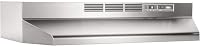
If you're still deciding on a convertible design, the Broan-NuTone PrintGuard Convertible 30 Inch offers 4-way convertibility and a dishwasher-safe mesh filter. Its 230 CFM maximum blower airflow and 2 fan speeds are useful details to weigh against your cooking needs.
The Hauslane UC-PS18 30 Inch is a ducted option with three venting configurations and six fan speeds. Match one of its outlet types to the duct route before choosing it.
The SNDOAS USGF3976S 30 Inch supports top, rear or ductless installation and includes a carbon filter. Its maximum airflow is 230 CFM.
How much airflow should you compare?
Compare airflow alongside the duct route, hood size and cooking habits. A CFM number alone doesn't tell you how well a hood will capture cooking air in your kitchen.
The Broan-NuTone PrintGuard and SNDOAS USGF3976S each have 230 CFM maximum airflow. The Hauslane UC-PS18 has a stated maximum capacity of 860 CFM in its specifications, while its product details also describe Power Control Technology that caps airflow below 350 CFM.
Those figures aren't a guarantee of performance in your kitchen. Duct length, bends, outlet size and hood placement can affect the setup, and local rules may apply.
Use our guide to how many CFM you need for a range hood to think through airflow needs. If you're considering a 400 CFM model, is 400 CFM enough for a range hood? explains why the answer depends on the installation and cooking style.
What should you measure before choosing?
Measure the hood space and the full vent route before buying. Confirm the width, depth and height available, then compare the outlet position and shape with any existing duct.
A 30-inch hood is intended for a particular opening width, but the whole cabinet area matters too. Check the model dimensions against doors, trim, shelves and nearby appliances.
For ducted installation, trace where the air will go and check for obstructions along the route. For ductless installation, verify the return-air path and the required filters.
Our guides to range hood sizing and range hood depth can help with the fit. Follow the exact installation instructions for clearances and mounting.
Which should you choose?
Pick ducted if you can connect the hood to an outdoor outlet; pick convertible when you need the choice of ducted or compatible ductless installation. Make the decision after checking the model's venting directions, filter needs and fit.
For an existing duct route, the Hauslane UC-PS18 gives three ducted configurations to compare with your opening. For more flexibility, the Broan-NuTone PrintGuard is convertible.
For a ductless option with an included carbon filter, consider the SNDOAS USGF3976S.
Compare the ducted under-cabinet hood options if your kitchen has a working outdoor route. If ductless is the practical fit, browse the ductless under-cabinet hood guide.
Frequently asked questions
Is a convertible range hood the same as a ducted hood?
No. A convertible hood can be set up to vent outdoors or recirculate air indoors, depending on its design and installation.
A ducted hood sends air through a duct to the outside.
Check the exact hood's venting options and instructions before choosing a setup.
Does a ducted range hood need an outside wall?
A ducted hood needs a continuous route to an outdoor exhaust point, but the route may go through a wall or upward through a ceiling and roof. The hood's outlet and the duct path must match.
Confirm the route is practical before buying or cutting cabinetry.
Can a convertible hood work without ductwork?
Some convertible hoods can recirculate air when installed with the required filters and configuration. The SNDOAS USGF3976S includes a carbon filter for ductless installation; other models may require a separate filter or different setup.
Follow the instructions for the exact model.
Which range hood is better for cooking smoke?
A ducted hood sends captured air outdoors, while a ductless setup filters and returns air to the room. That makes ducted venting the direct choice when an outdoor route is available.
Hood placement, airflow, cooking habits and installation all affect what reaches the hood.
Do ductless range hoods remove cooking odors?
Ductless hoods use filters, including charcoal or carbon filters on compatible models, to reduce odors before returning air indoors. They don't send the air outside.
Filter type, replacement and care matter, so check the hood manual for the right filter and schedule.