Ducted vs Non-Ducted Range Hood: Which to Buy? (November 2026)
Choose a ducted hood if your kitchen can vent air outside, and a non-ducted hood when it can't. A ducted hood pushes smoke and grease outdoors, while a non-ducted hood filters the air and recirculates it back into the room.
On this page (10 sections)
- Ducted vs non ducted range hood: the quick verdict
- How venting changes what the hood does to your kitchen air
- The duct path: the first thing to check before you buy
- Filtration and maintenance: mesh, baffle or charcoal
- Airflow and noise: what each setup means in practice
- Setup and install: what each type asks of your kitchen
- Who should buy a ducted hood?
- Who should buy a non-ducted hood?
- Can a convertible hood solve the problem either way?
- Which wins for your kitchen?
Choose a ducted range hood if your kitchen can vent air outside, and a non-ducted hood when it can't. A ducted hood pushes smoke and grease outdoors, while a non-ducted hood filters the air and recirculates it back into the room.
That one difference shapes how a ducted vs non ducted range hood performs in daily cooking. Ducted models remove heat and moisture as well as grease.
Non-ducted models trap grease in a filter and send the air back, so moisture stays in the kitchen.
Your kitchen's layout decides most of this. If an outside wall or roof duct is within reach, a ducted hood gives you the stronger option.
If you rent, live in a condo or have no duct path, a non-ducted hood is the practical choice.

Ducted vs non ducted range hood: the quick verdict
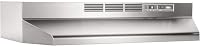
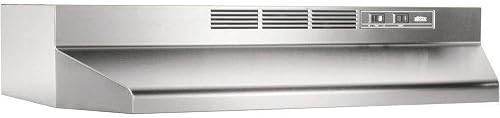
The COSMO COS-5MU30 is the best overall pick for most kitchens that can vent outside. Its 3-speed motor, reusable mesh filters and slim 5.5-inch profile make it a solid fit under a standard cabinet.
For kitchens without a duct path, the Broan-NuTone 413004 Ductless is the safer buy. It's built for non-ducted use only, so there's no duct to install and no confusion about which filter to run.
If you want to keep both doors open, the SNDOAS USGF3976S converts between vented and ductless. It's a reasonable middle pick when you plan to duct later or move the hood to another kitchen.
Here's how the four models line up on the facts that matter:
| Model | Venting | Airflow setup | Filters | Best for |
|---|---|---|---|---|
| COSMO COS-5MU30 | Ducted, convertible | 3-speed | Reusable aluminum mesh | Most kitchens with a duct |
| Broan-NuTone 413004 | Non-ducted only | 2-speed | Replaceable charcoal | Renters and no-duct kitchens |
| SNDOAS USGF3976S | Ducted or ductless | 2-speed, 230 CFM | Aluminum mesh with carbon cotton | Planning to duct later |
| COMFEE' CVU30W2ABB | Ducted or ductless | 2-speed, 200 CFM | Aluminum mesh and carbon composite | Budget non-ducted use |
| Product | Best for | Venting | Size (W x D x H) | Filters | Our score |
|---|---|---|---|---|---|
| COSMO COS-5MU30 Delta 30 Inch | ducted setup | Top or back, 5 in round | 29.75 x 19.75 x 5.5 in | Reusable aluminum mesh | 8.9 |
| Broan-NuTone 413004 Ductless 30 Inch | renters | Non-ducted only | 30 x 17.5 x 6 in | Replaceable charcoal | 8.7 |
| SNDOAS USGF3976S 30 Inch | convertible option | Top or rear, convertible | 29.9 x 17.5 x 4.7 in | Aluminum mesh with carbon cotton | 8.0 |
| COMFEE' CVU30W2ABB 200 CFM 30 Inch | budget non-ducted | Ducted or ductless | 30 x 18 x 5.6 in | Aluminum mesh and carbon composite | 7.8 |
How venting changes what the hood does to your kitchen air
A ducted hood removes air from the room, and a non-ducted hood cleans and returns it. That difference affects smoke, grease, steam and how often you replace a filter.
A ducted hood pulls cooking air through a metal filter and sends it down a duct to the outdoors. Grease sticks to the filter, and smoke, heat and moisture leave the building.
A non-ducted hood does the first half only. Air passes through a mesh or baffle filter to catch grease, then a charcoal or carbon layer to reduce odors, and returns to the room.
Nothing leaves the house.
That's why the two setups suit different kitchens. A ducted hood is the better fit for frequent frying, high heat and kitchens that get steamy.
A non-ducted hood keeps grease and some smell out of the air, but it can't lower the humidity or clear smoke as quickly.
The question behind are ductless range hoods effective is really about how much you cook. For light use they're fine.
For daily searing and wok cooking, they're a compromise.
The duct path: the first thing to check before you buy
If a duct can reach an outside wall or the roof, buy ducted. The duct path decides the choice before fan speed or style ever matter.
A ducted hood needs a straight, short run to the outdoors. A 5-inch round duct is typical for compact under-cabinet models.
The COSMO COS-5MU30 uses a 5-inch round duct and vents from the top or the back.
Long runs, tight bends and a run through a cold attic all cut airflow and raise noise. A short, straight path keeps the hood working near its rated speed.
A non-ducted hood needs no duct, just a power source and a cabinet. That's why the Broan-NuTone 413004 suits rentals and condos where cutting a hole isn't an option.
Measure the route before you order. If there's no path within reach, stop there and plan for recirculation.
Our guide to the best ducted range hoods under a cabinet covers models built for tight spaces.
Filtration and maintenance: mesh, baffle or charcoal
Ducted hoods usually rely on washable metal filters, while non-ducted hoods add a charcoal or carbon layer that gets replaced. Plan the upkeep before you pick.
A ducted hood's filter is often reusable aluminum mesh or a baffle. The COSMO COS-5MU30 ships with reusable multi-layer aluminum mesh filters.
You wash them, dry them and put them back.
A non-ducted hood needs two stages. The mesh catches grease, and a charcoal or carbon filter traps odors.
The Broan-NuTone 413004 uses a replaceable charcoal filter. The SNDOAS USGF3976S and the COMFEE' CVU30W2ABB include a carbon cotton composite filter along with a mesh filter.
The metal part washes. The carbon part does not, and it loses its odor-trapping power over time.
Budget for replacements on a schedule, especially in a kitchen used daily.
This is the real running cost of a non-ducted hood. A ducted hood asks more of your wall or roof but less of your filter budget.
Our explainer on how does a recirculating range hood work walks through the two-stage filter path.
Airflow and noise: what each setup means in practice
Ducted hoods carry smoke away from the kitchen, while non-ducted hoods filter and return it, so the airflow figures read differently. The rated numbers help, but the vent path decides the real result.
Airflow is measured in CFM, or cubic feet per minute. The SNDOAS USGF3976S is rated at 230 CFM and the COMFEE' CVU30W2ABB at 200 CFM.
The COSMO COS-5MU30 runs as quiet as 50 dB on its lowest fan speed with rigid ducting.
The Broan-NuTone 413004 is rated at 100 CFM. A non-ducted hood's job is lighter, so a lower figure is normal.
It cleans the air it pulls in rather than pushing it down a duct.
Noise depends on the fan and the duct. A ducted hood with a straight run runs quieter than the same hood with a long, twisting duct.
A non-ducted hood has no duct noise, but the fan still makes sound.
For a quiet kitchen, a ducted model on a short run usually wins. For a non-ducted hood with two speeds, the setup stays basic.
Setup and install: what each type asks of your kitchen
A ducted hood needs a hole in the wall or roof and a duct run; a non-ducted hood needs only power and mounting space. The install gap is the second-biggest reason buyers pick one over the other.
A ducted install involves cutting an opening for the duct, fitting the ductwork and sealing it. The COSMO COS-5MU30 needs HVAC tape for installation.
Plan the vent exit before the hood goes up, since the hole position limits the layout.
The non-ducted Broan-NuTone 413004 mounts under a cabinet and needs no outside connection. Its sides are mitered with no sharp edges, and it should sit at least 18 inches above the cooktop.
Convertible models split the difference. The SNDOAS USGF3976S vents from the top or the rear.
Its exhaust pipe is not included. The COMFEE' CVU30W2ABB needs a 7-inch exhaust pipe for vented use and ships without a power plug.
Check the power and vent details before ordering. A hard-wired hood needs an electrician if there's no nearby circuit.
If you're weighing both venting options in general, our comparison of vented range hoods vs non vented covers the same ground for full-size models.
Who should buy a ducted hood?
Buy ducted if you cook most days, fry often or want smoke and steam out of the house. It's also the better choice when the duct run is short and the kitchen gets hot and humid.
The COSMO COS-5MU30 suits a standard 30-inch cabinet with a clear vent path. Its 3-speed motor and reusable mesh filters keep upkeep simple.
The slim 5.5-inch body leaves room under the cabinet for cooking.
The SNDOAS USGF3976S fits a kitchen that will be ducted now but might not be later. Its 230 CFM fan handles everyday cooking, and its 4.7-inch body is the slimmest of the four.
Pick ducted when the wall or roof route is short and mostly straight. A longer or tighter run costs airflow and adds noise.
Skip ducted if cutting the wall isn't allowed. In a rental or a condo with rules against exterior penetrations, the duct path is a dead end.
Who should buy a non-ducted hood?
Buy non-ducted if there's no duct path or the building won't allow one. It's the right call for renters, condos, apartments and kitchens where the stove sits far from an outside wall.
The Broan-NuTone 413004 is the pick for the simplest setup. It's non-ducted only, so there's no vent decision to make.
Its replaceable charcoal filter and two-speed fan cover light to moderate cooking.
The COMFEE' CVU30W2ABB suits a black kitchen on a budget. It runs vented or ductless with a 200 CFM fan and a reusable aluminum mesh filter in the box.
Its 30-inch body fits under a standard cabinet.
Pick non-ducted when the duct run would be long or impossible. A short vent path is always better, but a working non-ducted hood beats a ducted hood you can't install.
Skip non-ducted if you deep-fry often or steam a lot. The filter traps grease and some odors, but moisture and heat stay in the kitchen.
Can a convertible hood solve the problem either way?
Yes, a convertible hood lets you install vented now or ductless later, so it's a safe pick when the vent path is uncertain. It's the flexible choice for a kitchen that might change.
The SNDOAS USGF3976S and the COMFEE' CVU30W2ABB both run vented or ductless. Each ships with a carbon filter for recirculation.
The COSMO COS-5MU30 is ducted as sold and converts with the CFK4 carbon kit, sold separately.
A convertible hood is the sensible buy when you're not sure yet. You can mount it, run it ductless, and add a duct later if the wall opens up.
Just plan the duct route now so the hood's vent opening lines up later.
The catch is the filter path. A convertible hood used ductless needs its carbon layer, and that layer needs replacing.
Used ducted, the carbon layer stays out of the way and the metal filter does the work.
Convertible models also add a step to setup. You choose top or rear venting and match the duct size.
The SNDOAS unit needs its exhaust pipe separately. Budget for those parts before you compare totals.
Which wins for your kitchen?
For most kitchens with a vent path, a ducted hood wins on smoke, steam and long-term filter costs. For kitchens without one, a non-ducted hood is the right answer.
The COSMO COS-5MU30 takes the overall spot. It vents outside, runs three speeds, uses washable mesh filters and fits in a slim profile.
It's the best ducted vs non ducted range hood pick when the wall or roof allows a duct.
Go non-ducted with the Broan-NuTone 413004 if the building won't allow a hole. Choose the SNDOAS USGF3976S if you want the option to duct later.
Pick the COMFEE' CVU30W2ABB if a black hood and a lower airflow need fit your kitchen.
The decision rule is simple. Look for an outside wall or roof route first.
If one is short and straight, buy ducted. If not, buy non-ducted and plan for filter changes.
Either way, measure the cabinet space and the vent opening before you order.
Frequently asked questions
Can a ducted range hood work without venting outside?
Only if the model is built to convert. The COSMO COS-5MU30 vents outside as sold and needs the CFK4 carbon filter kit to recirculate.
A hood sold as ducted-only has no filter path for recirculation, so it should not run without a duct.
How often do non-ducted hood filters need changing?
Plan on a charcoal or carbon filter change every 3 to 6 months in a kitchen used daily. Grease-heavy cooking clogs the filter faster.
Reusable mesh or baffle filters wash in the dishwasher, but the carbon layer that traps odors cannot be washed and must be replaced.
Does a non-ducted hood remove moisture from cooking?
No. A recirculating hood sends filtered air back into the room, so steam and moisture stay indoors.
A ducted hood pushes moisture outside.
If you boil or steam often, a ducted setup or a window exhaust fan handles moisture better.
How do I know if my kitchen can be ducted?
Look for an existing duct or a clear path to an outside wall or roof above the hood. A 5- to 7-inch round duct is typical, depending on the model.
Check that the route is short and has few bends, since long runs cut airflow and add noise.
Is a non-ducted hood worth it if ducting is impossible?
Yes, for light to moderate cooking. It traps grease and some odors, though it cannot remove heat or moisture.
For heavy frying or frequent cooking, a ducted hood performs better, so run the numbers on a duct path before settling for recirculation.